👇 SITEWIDE 50% OFF, REGISTER NOW👇
00
HOURS
00
MINUTES
00
SECONDS
USE COUPON
MONDAY50
Coupon copied!
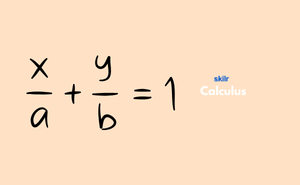
Calculus is a branch of mathematics focused on the study of change and motion. It involves concepts such as limits, derivatives, integrals, and infinite series. Calculus is fundamental for understanding and modeling dynamic systems and processes in various fields, including physics, engineering, economics, and biology. It provides tools for analyzing the behavior of functions and for solving complex problems involving rates of change and accumulation.
Why is Calculus important?
Who should take the Calculus Exam?
Calculus Certification Course Outline
Introduction to Calculus
Limits and Continuity
Differentiation
Applications of Differentiation
Integration
Applications of Integration
Differential Equations
Infinite Series
Multivariable Calculus
Applications of Multivariable Calculus
Calculus in Real-World Problems
Credentials that reinforce your career growth and employability.
Start learning immediately with digital materials, no delays.
Practice until you're fully confident, at no additional charge.
Study anytime, anywhere, on laptop, tablet, or smartphone.
Courses and practice exams developed by qualified professionals.
Support available round the clock whenever you need help.
Easy-to-follow content with practice exams and assessments.
Join a global community of professionals advancing their skills.
(Based on 159 reviews)
Yes, many roles in IT, research, education, and data fields need strong math skills, including calculus.
Jobs in data science, finance, engineering, and analytics value candidates who can apply calculus to solve problems.
Yes, it’s helpful for proving math skills in roles involving analysis, modeling, or teaching.
It proves your math strength, which is needed in technical interviews and project work involving analysis.
Tech firms, banks, research labs, consulting firms, and educational institutions look for calculus skills.
Yes, calculus appears in many entrance and government exams, so certification strengthens your math base.
Skills include solving limits, derivatives, integrals, and applying them to real-world scenarios.
You will be tested on limits, derivatives, integrals, applications, and calculus-based problem solving.
Anyone in a math-related job, student aiming for STEM, or professional switching to technical roles.

