👇 SITEWIDE 50% OFF, REGISTER NOW👇
00
HOURS
00
MINUTES
00
SECONDS
USE COUPON
MONDAY50
Coupon copied!
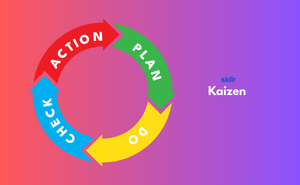
Kaizen is a Japanese business philosophy on continuous improvement. Kaizen philosophy is based on the idea that small, incremental changes results in significant improvements over time. Kaizen involves all employees, from the CEO to the frontline workers, in the process of identifying and implementing improvements in every aspect of the organization. It is not just about making changes for the sake of change but rather about systematically identifying areas for improvement, implementing solutions, and then continuously evaluating and refining those improvements. Kaizen is often associated with lean manufacturing and has been widely adopted by companies around the world as a way to enhance quality, efficiency, and overall organizational performance.
Why is Kaizen important?
Who should take the Kaizen Exam?
Kaizen Certification Course Outline
Kaizen Principles
Problem-Solving Techniques
Process Improvement Methodologies
Kaizen Tools and Practices
Change Management
Lean Principles
Quality Management
Leadership in Kaizen
Kaizen in Different Industries
Measuring and Monitoring Improvement
Kaizen Project Management
Kaizen and Organizational Culture
Credentials that reinforce your career growth and employability.
Start learning immediately with digital materials, no delays.
Practice until you're fully confident, at no additional charge.
Study anytime, anywhere, on laptop, tablet, or smartphone.
Courses and practice exams developed by qualified professionals.
Support available round the clock whenever you need help.
Easy-to-follow content with practice exams and assessments.
Join a global community of professionals advancing their skills.
(Based on 714 reviews)
A great resource for learning about Total Quality Management (TQM). The scenarios on employee empowerment and culture shifts were very insightful for anyone leading a Kaizen initiative.
I found the focus on 5S and Gemba Walks very practical. It provides a clear framework for organizing the workspace and observing processes directly where the work happens.
Excellent for understanding Continuous Improvement and PDCA cycles. The questions on identifying 'Muda' (waste) helped me see how small changes can lead to massive efficiency gains.

